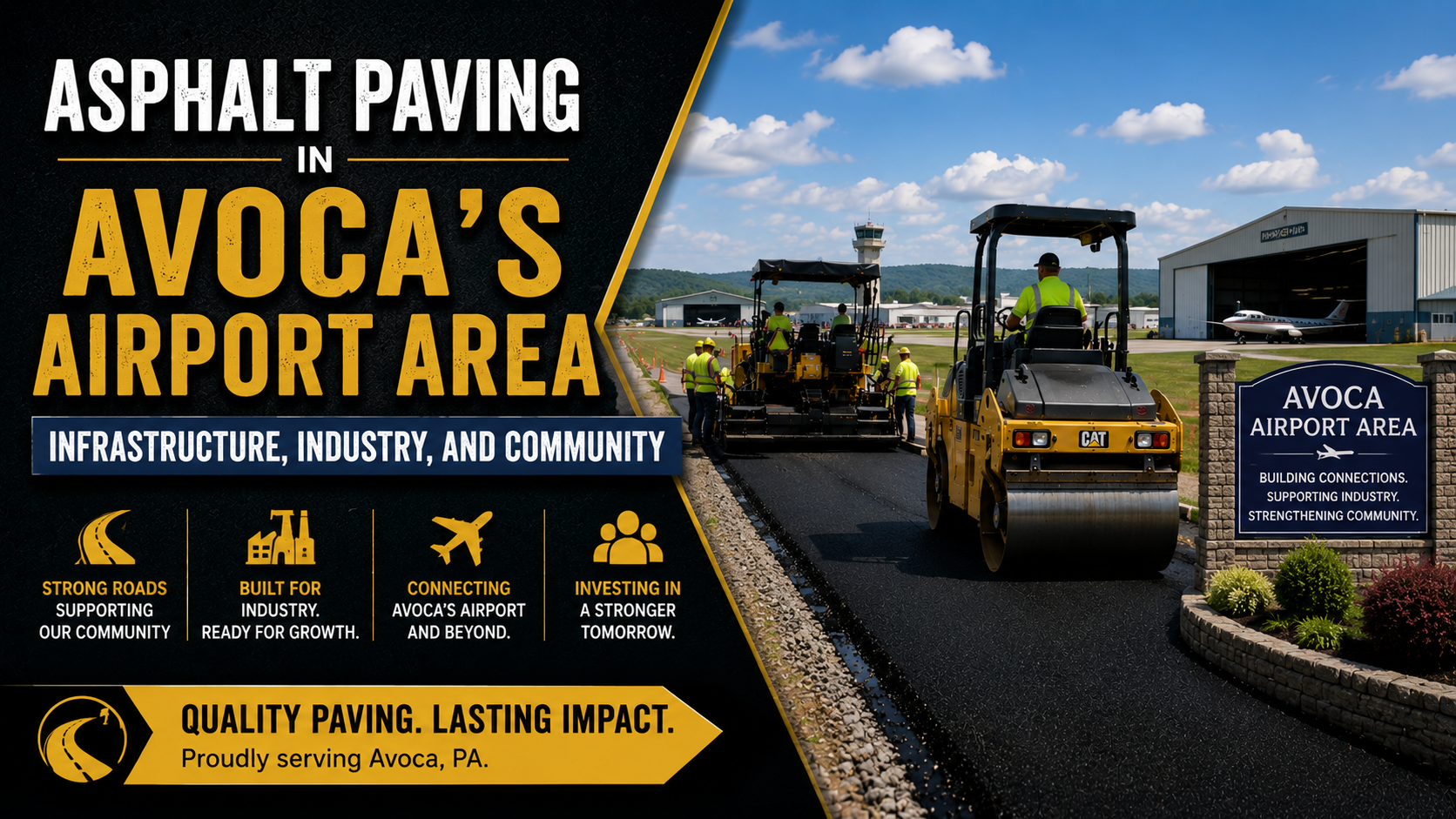
Few geographical features shape the character of a neighborhood as distinctly as an airport. In Avoca, Pennsylvania, the presence of Wilkes-Barre/Scranton International Airport a facility whose history stretches back to 1945 and which serves as the primary commercial airport for northeastern Pennsylvania has created a distinct land-use pattern in the area immediately surrounding it. The airport zone is a unique blend of aviation infrastructure, commercial businesses, transportation corridors, and residential neighborhoods that have grown up alongside the facility over generations.
The Airport Area of Avoca, in this context, refers to the broader zone influenced by the airport’s presence the commercial strips, industrial service areas, transportation logistics facilities, parking fields, and the residential neighborhoods that exist at the margins of this activity. Each of these land uses has specific asphalt paving needs that differ in important ways from purely residential or purely commercial contexts.
This article explores what makes Asphalt Contractor Airport Area zones distinctive, and what property owners and facilities managers in this area need to know about pavement infrastructure.
High-Traffic Zones: What They Demand from Asphalt
Areas near airports tend to experience significantly higher volumes of vehicular traffic than typical residential neighborhoods. Shuttle buses, delivery vehicles, rental car fleets, commercial trucks, and commuter vehicles all concentrate in zones near airport facilities. This elevated traffic volume and the heavier vehicle weights involved places substantially greater demands on asphalt pavement than standard residential use.
For asphalt to perform in high-traffic environments, several design parameters must be enhanced:
Increased Pavement Thickness: Where standard residential driveways might use 3 inches of total asphalt thickness, commercial areas serving heavy traffic may require 4–6 inches of asphalt over a deeper aggregate base (8–12 inches of compacted base material). This increased structural depth distributes loads more effectively and prevents base failure under repeated heavy loadings.
Stiffer Asphalt Binders: For surfaces regularly traversed by heavy commercial vehicles, asphalt mixes with stiffer, polymer-modified binders are specified. These binders resist deformation (rutting) at elevated summer temperatures better than standard binders.
Heavy-Duty Surface Mixes: Stone Matrix Asphalt (SMA) and other gap-graded surface mixes provide superior stability under heavy loads by creating stone-to-stone contact within the mix, rather than relying primarily on the binder for structural support.
Reinforced Joints and Edges: Areas where vehicles repeatedly turn or brake at entry and exit points, loading docks, and stop zones are particularly vulnerable to surface deformation. Edge reinforcement using concrete curbing and careful attention to joint construction at pavement boundaries helps maintain surface integrity in these stress concentration points.
Parking Facilities Near Airport Areas: A Special Category of Pavement
Long-term and short-term parking facilities are among the most demanding applications for asphalt pavement. In airport-adjacent zones, parking areas must handle:
Dense, Concentrated Traffic: All vehicles in a parking lot stop, turn, and maneuver these actions apply turning and braking forces to the pavement surface that are absent in simple through-traffic situations.
Fuel and Oil Spills: In areas where vehicles are parked for extended periods, fuel and oil drips accumulate. Petroleum-based fluids dissolve asphalt binder and cause surface softening, raveling, and potholes if not addressed. Oil-resistant sealcoats and regular cleaning help mitigate this.
Drainage Demands: Large paved areas collect significant volumes of stormwater during heavy rain events. Parking facilities must be graded carefully to drain water effectively, avoiding ponding that accelerates asphalt deterioration and creates pedestrian hazards.
Pavement Marking Durability: Parking lot markings in high-use facilities fade quickly and must be renewed frequently to maintain clear traffic flow and parking organization.
ADA Compliance: Federal accessibility requirements mandate specific dimensions, slopes, and surface standards for accessible parking spaces, access aisles, and pedestrian routes within parking facilities. New and renovated parking areas must meet these requirements.
Designing and building a parking facility that performs well over its intended life requires careful attention to all of these factors something that goes well beyond simply applying asphalt to a flat area.
Commercial Corridor Paving: Entry Points, Drive Lanes, and Service Areas
Along commercial strips in the airport area, asphalt paving encompasses several specific applications that each have their own technical requirements:
Entry Driveways and Aprons: The point where a commercial property’s driveway meets the public road is one of the most stressed areas of any commercial asphalt installation. Vehicles decelerating from road speed and then accelerating away from the property create repeated load applications at this specific location. Concrete aprons using concrete for the first several feet of the commercial entry are sometimes used in high-stress entry locations because concrete’s rigidity better resists the deformation forces at work. When asphalt aprons are used, they require extra base depth and stiffer mixes.
Drive-Through Lanes: Many commercial facilities in airport-adjacent commercial zones include drive-through service lanes. These areas, where vehicles idle and engage in slow, turning movement, are particularly susceptible to rutting and oil contamination. Polymer-modified mixes and regular sealcoating are essential maintenance measures.
Loading and Unloading Areas: Where commercial trucks deliver supplies or remove waste, asphalt is subject to extreme point loads. The steering axles of heavy trucks can exert ground pressures of 100 psi or more far beyond what typical residential asphalt is designed to withstand. Reinforced base depth and heavy-duty mixes are required in these zones.
Service Road Surfaces: Internal service roads on commercial and industrial properties in the airport area carry a mix of standard vehicles and occasionally heavy delivery vehicles. Appropriate structural design for the anticipated vehicle mix extends service life dramatically.
How Asphalt Is Delivered and Placed: The Production and Logistics Chain
For properties in the airport area and throughout Avoca, it is worth understanding the logistical chain behind asphalt paving from production to placement because this chain affects project scheduling, quality, and efficiency.
Asphalt Plants: Hot mix asphalt is produced at batch plants or drum mix plants, where aggregate and binder are combined at high temperatures (typically 280°F to 350°F). Pennsylvania has numerous asphalt plants throughout the state, and the proximity of the paving site to the nearest plant affects how far the mix must be transported.
Transport: Asphalt is transported in insulated dump trucks to maintain temperature during the haul. The further the plant from the job site, the more heat is lost in transit. Asphalt that arrives too cold (below approximately 250°F) may not compact properly.
Placement: At the job site, the hot mix is deposited into a paving machine (paver), which spreads the material to the specified thickness across the width of the pavement. Experienced operators set the paver’s screed to achieve the correct thickness and cross-slope.
Compaction: Immediately behind the paver, rollers compact the freshly laid asphalt. This process must be completed efficiently while the mix is within the appropriate temperature range typically before it cools below 175°F.
The entire sequence from plant to compacted pavement is time-sensitive, and experienced crews manage each step with precision. In urban and commercial areas near the airport, traffic management and coordination with adjacent businesses add logistical complexity.
Pavement Performance Monitoring: How Conditions Are Tracked
For commercial property managers and facilities directors in the airport zone, pavement management is an ongoing responsibility. Many well-managed properties use a formal pavement condition index (PCI) system a standardized method of rating pavement condition on a scale from 0 (completely failed) to 100 (new pavement).
PCI assessments involve walking the pavement and documenting all observed distress types, their extent, and severity. The resulting score indicates where the pavement stands in its lifecycle and helps prioritize maintenance spending. Properties typically:
- Score 70–100: Good condition sealcoating and crack sealing appropriate
- Score 40–70: Fair condition more intensive maintenance (patching, overlay) appropriate
- Score 0–40: Poor condition structural rehabilitation or replacement needed
Using a PCI-based approach, property managers can plan pavement expenditures years in advance, avoiding reactive emergency spending and optimizing maintenance timing for maximum pavement life extension.
Environmental Factors Around Airport Areas
Airport-adjacent zones present some specific environmental considerations that can affect asphalt paving projects:
Soil Quality: Areas near older airport facilities may have soil quality issues from historical fuel storage, de-icing operations, or other airport-related activities. Contaminated soils must be properly characterized and, if necessary, remediated or capped before paving work proceeds.
Noise Ordinances and Work Hours: Near active airports, work hours may be restricted by local ordinances or airport operations protocols. Nighttime paving common in busy commercial areas may not always be permitted in airport proximity zones.
Safety Clearances: Any work involving tall equipment, temporary lighting, or structures near the airport’s approach or departure corridors must be coordinated with airport authority guidelines to avoid creating aviation hazards.
A contractor with experience in airport-adjacent work will be familiar with these considerations and can plan projects accordingly.
Conclusion
The Airport Area of Avoca is a distinctive zone where residential community life, commercial activity, and aviation infrastructure intersect. The asphalt paving needs of this area reflect that complexity from standard residential driveways to heavy-duty commercial lots and service roads that must withstand loads far beyond typical residential use.
Understanding the engineering demands of high-traffic paving, the logistics of asphalt production and placement, and the specific environmental and regulatory context of airport-adjacent zones is essential for delivering pavement that performs as expected. Property owners, facilities managers, and businesses in this zone deserve asphalt work that is planned carefully, executed with the right materials and equipment, and maintained proactively to maximize the return on their infrastructure investment.